Tuesday, February 10, 2026
Langkit vs jpdb
JPDB is another fantastic free tool that, on the surface, looks very similar to langkit. I discovered it when I was about a year into development and by that point they were already very similar. The core loop for both is the same:
- Select content to learn towards
- Extract a word list
- Use an SRS to learn words
- Learn words via sentences
- Learn Kanji via keywords
Sentences
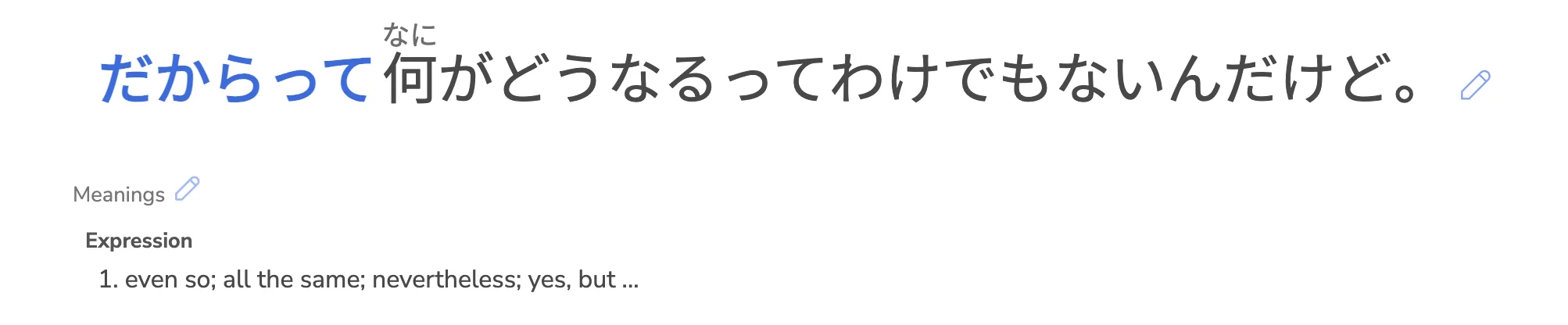
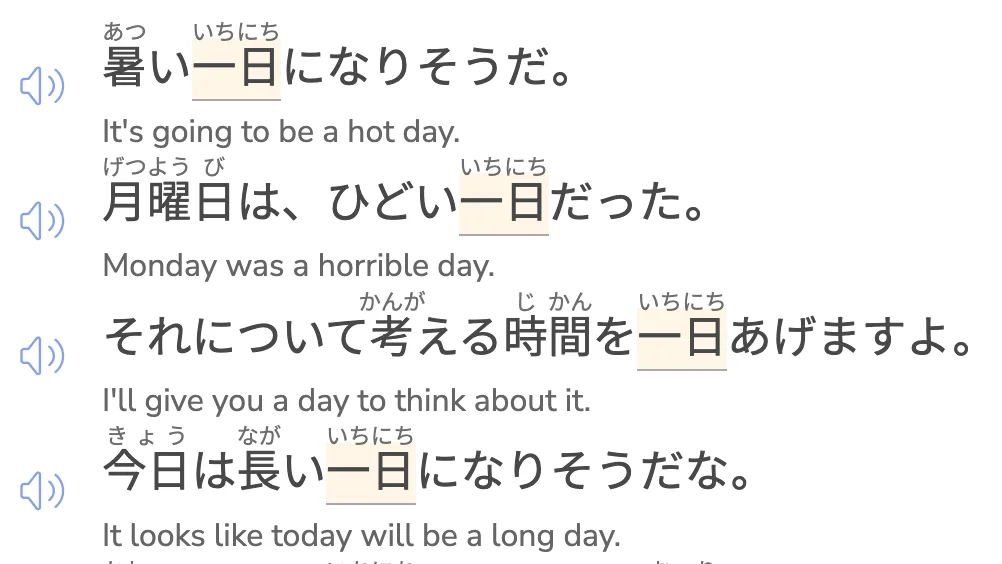
While the ergonomics and the UI are similar, Langkit and JPDB are very different under the hood. Langkit's focus is on effective varied practice. Generally on jpdb you will have 3-4 example sentences for most words, and, since jpdb uses MeCab, they will often be inaccurate.
Langkit uses AI to generate sentences specifically based on the words you know, so you get a tailored sentence on every review.
Here's an example of how JPDB's sentence generation and tokenization can be confusing:
And their sentences can be quite similar:
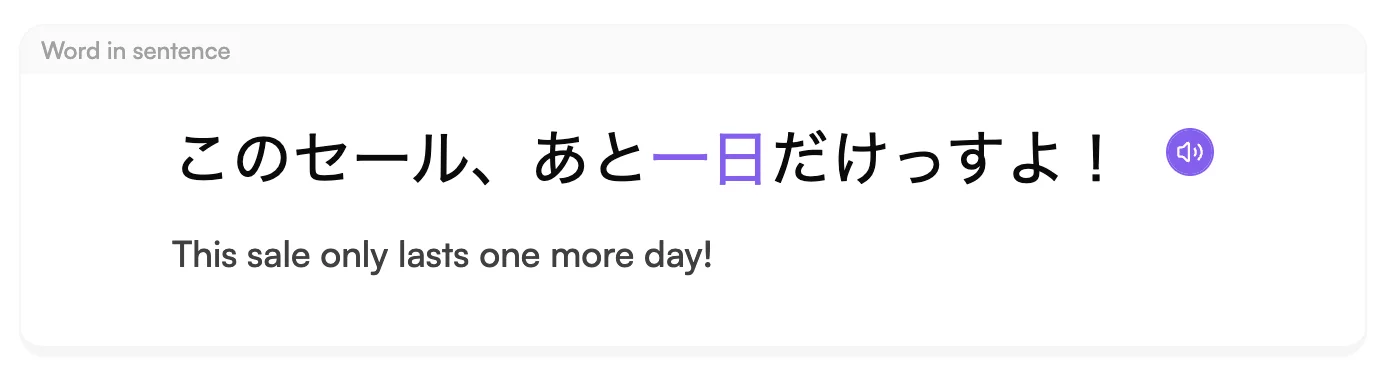
Langkit sentences by contrast are more accurate and try to present the word in a realistic scenario:
Kanji Keywords
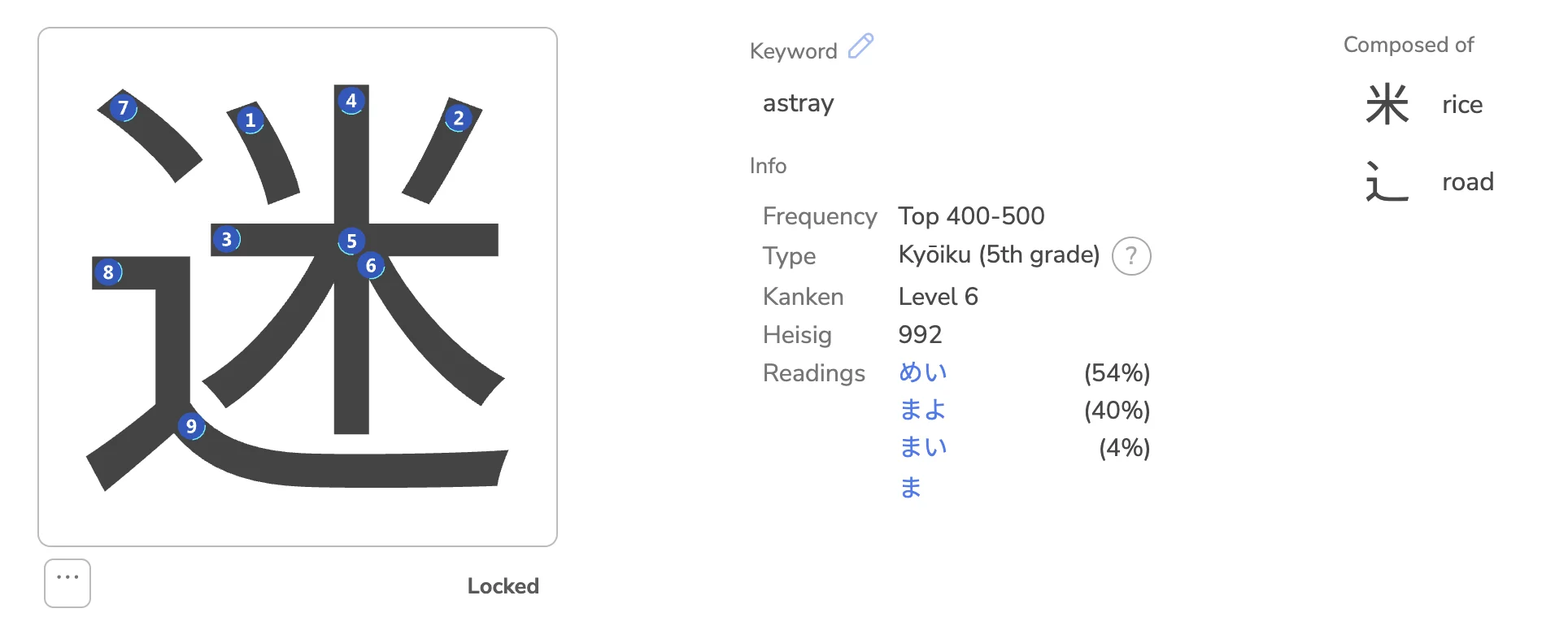
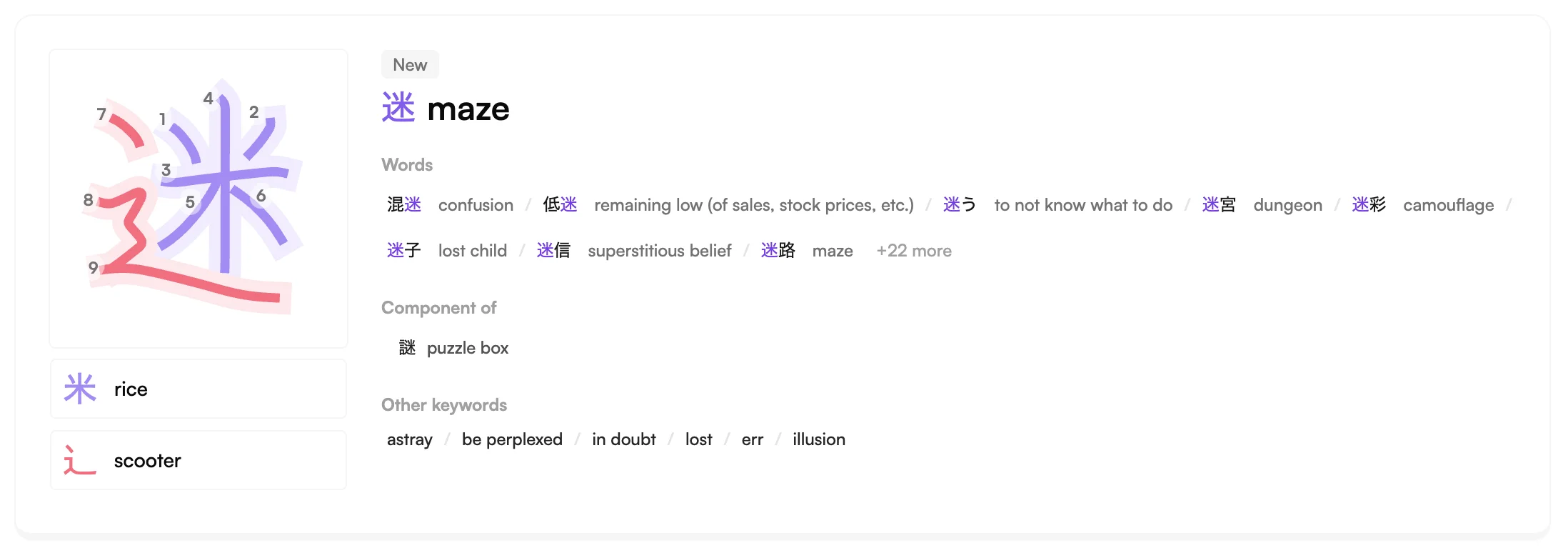
Both apps also share kanji keywords as a feature. jpdb's keywords are an upgrade over Heisig keywords, but they are still problematic since they don't take advantage of the concreteness effect, which is a big deal! jpdb has many abstract keywords such as "迷 - astray" or "憾 - remorse" that will be much harder to learn than langkit keywords ("迷 - maze" or "憾 - heavy heart"). There are also many keywords that chase the same idea like "情 - feelings" and "感 - emotion". The difference seems minor but words following the concreteness effect have been shown to be remembered up to 2x as well as those without!
Grammar & Popup Dictionary
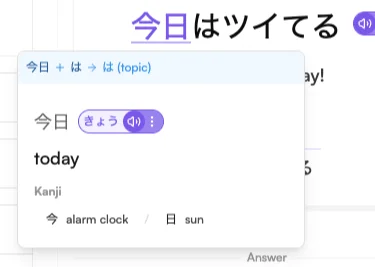
Langkit has a popup dictionary with accurate grammar and word information over all Japanese text. This allows you to partially translate a sentence and better understand its construction.
JPDB is more customizable
jpdb is much more customizable than langkit and gives you more data to work with. Langkit on the other hand attempts to hide away complexity and is very opinionated about what the optimal way to learn is.
Langkit will never show you if a kanji is "Kyōiku" or what its Heisig number is. I don't think this is something a language learner will ever benefit from and I'd much rather leave out confusing jargon and historical fragments wherever I can. This is not a science-backed choice though, just a philosophical approach to building software, and langkit doesn't aim to replace enthusiast tools like Anki or jpdb that permit deeper customization and give access to all the nerd stats.
Which should you use?
If you're already deep into JPDB and happy with it, stick with it. The extra gains that langkit can give you probably won't be worth the effort.
Otherwise, if my opinions on learning resonate with you, come use langkit.